Monday, February 24, 2014

Baron, Chapter 4: Handwriting

I found this chapter extremely interesting, probably one of the most interesting readings I have been assigned to this semester. I think this is probably because it is something I identify with. I always notice people's handwriting and feel happy when a page of my notes has uniform handwriting. It's pretty obvious that handwriting has taken a downslide since computers and typewriters were introduced. When calligraphy was the norm, beautiful handwriting was stressed and praised, but now it seems like a rarity.


This chapter talks about how computers are replacing handwriting. Even to the extreme of taking children straight to a keyboard after they understand the alphabet and skip the penmanship lessons. I remember weeks and weeks in elementary school taking penmanship lessons, and while it was extremely annoying, I'm glad I did. If elementary schools start doing this, we will have generations of people completely reliant on technology-- although some may argue that we all already are. Like the book says, handwriting is "creative, artistic, and personal" (49). If you take handwriting out of children's curriculum, will art suffer? Will the brain actually change? Baron makes the argument that handwriting creates a personal connection to the writing. I completely agree with him. During class, I have to write my notes with a pen on paper. If I type my notes out, it becomes completely mindless and I don't remember anything that was said. I'm sure not all people are like this, but handwriting my notes in class is crucial to me comprehending what happened in class. Even while studying, I will write my study guide over and over while re-reading it and that's the best way for me to retain my notes in preparation for a test.
The section in this chapter about graphology was extremely interesting too. It does seem a little fishy and kind of like astrology (but even more weird) to say that handwriting plays a part in your personality, but it would be cool to look into. I've heard about the Jon Bonet Ramsey case with the handwriting analysis on the ransom letter, and while it does seem intriguing it's sad that the letter didn't hold any further clues towards finding her killer.

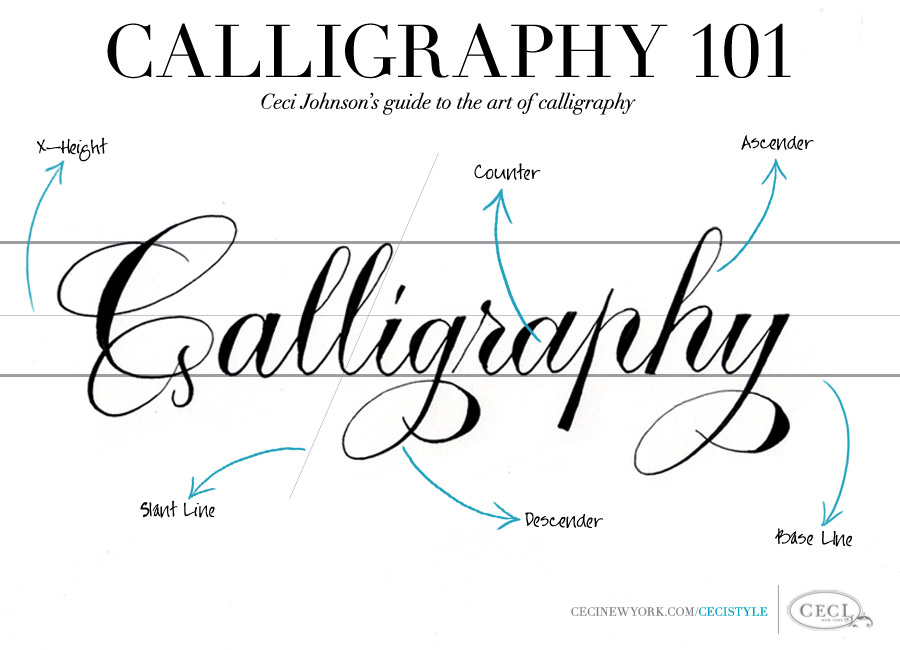
Below is a graph I found of how to analyze your own handwriting! It seems like a lot of work for nothing, but it does look like an interesting hobby.


Sunday, February 9, 2014

Baron, Chapter 1: Writing it Down

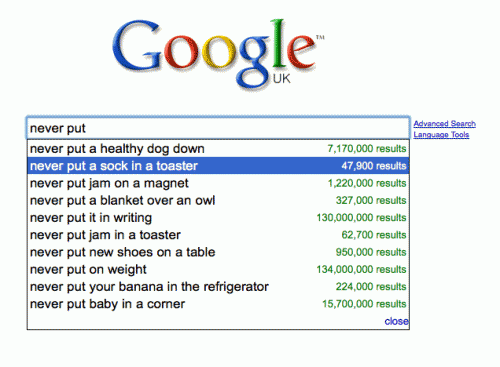
This chapter focused in on the shift in ideas of writing being unreliable and ambiguous to writing being the standard for reliability and trustworthiness. The chapter opened up with Plato's Phaedrus, a text we've read earlier in the semester quoting a section where Socrates warns that writing will make human memory weaker. It's an interesting point and I do think there's a lot of truth in this statement when you take technology into account as well. The internet has made it so easy for humans to find out the most pointless facts in the click of a button. Can't remember what movie you've seen that actress in before? Google it. The age Einstein was when he first began to talk fluently is on the tip of your tongue? Google it. I think humans greatly rely on the internet for finding pointless facts or even useful facts. However, I don't necessarily think this is bad. It definitely has affected human memory and attention span, there are multiple studies based on this, but in other ways I think it has helped immensely in opening up people's minds to many different areas of interests they may not have had before.


Elaborating off of Plato's ideas that writing is untrustworthy, the chapter touched on the ordinary items we see everyday that are covered in writing. It said the dollar bill contains 81 words. 81 words! That is crazy. Right now, as I'm writing this in the Starbucks on campus, I'm looking at my drink cup. There are many more words than I imagined to be on it before I looked. "Decaf, shorts, milk, syrup, custom, drink-- not to mention the tiny font that explains the cup uses 15% less plastic than a cup made from PET. It's just a simple drink cup and yet the writing on it does make it seem more reliable. If I picked up a can of soup and all it said on it was "Campbell's Tomato Soup" a la Warhol (except not because that actually has a few more words on it) I would be too sketched out to buy it. We've gotten used to the ingredient lists, the nutritional information, the descriptive definition of the flavors that it never quite seems to recreate, and if a soup can contained none of this-- we wouldn't buy it.

I've heard from so many adults, on the top of the list are my grandparent's at Christmas dinner, that texting will ruin our generation's writing capabilities. I would have to say, this is not necessarily true. I generally find that my friends text with better grammar and spelling than my mom does. The iPhone's autocorrect aids in this, but still I find it's much easier to have a conversation with my mom on the phone rather than over text message because sometimes it's hard to understand what she is trying to say. There are multiple websites dedicated to funny text conversations with parents. Texting will most definitely change the way writing is an evolve it into something else, but this is the case with all new technologies. People are afraid of what they don't know or quite understand, as Plato's Phaedrus proves in his distrust of the written word.


Sunday, February 2, 2014

Lupton

Typeface is just as essential to graphic designers as steel or other materials are essential to architects. That is to say, typeface is the basis and lays the groundwork for graphic design. If you pick a bad font, you're screwed. I know we've all seen them-- from posters to movie titles, the font a graphic designer chooses can make or break the image.


In the early 15th century, Johann Gutenberg revolutionized writing through the intention of the printing press. Because of the printing press, scribal books no longer had to be written by hand and could be mass produced, which resulted in an increasingly smarter world of educated people. Below is an image of Gutenberg's font.
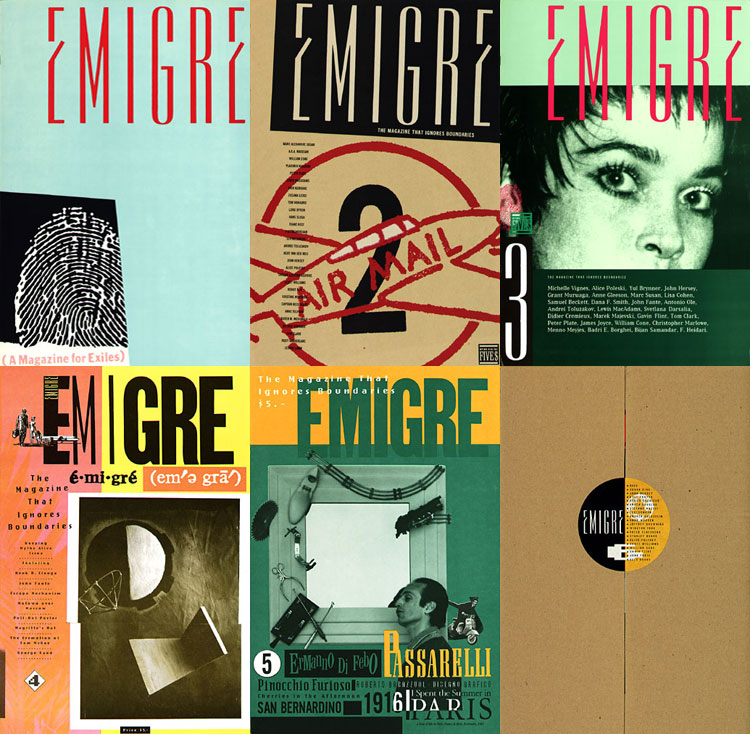
In the early 1900s, designers began to get a bit more creative with their fonts. Just looking at the fonts they created during that time really seems to reflect the modernist movement that was going on. As technology changed so did fonts. With the 1980s personal computers alongside with low resolution printers made typeface easily reachable to a large audience. Emigre Magazine was created in the 1980s and was all about different fonts. Pretty amazing a whole magazine could be dedicated to fonts.
Ligatures, stems, serifs, san-serifs, and more are all different elements that set fonts apart from other fonts. I've never looked at a font and really thought about exactly what makes it different from other fonts but there are really so many elements that come together to make each font slightly or dramatically different from another.

In my English 332 class we watched a documentary called Helvetica, which was all about the font Helvetica. Up until that movie I'd never noticed how prevalent the font really is. It's on teeshirts, coffee mugs, street signs and so much more. Since watching that I've been really noticing how often I see Helvetica or slight variations of it in my daily life.